Jul 8, 2026 | Gutter Replacement, New Jersey, Roof Damage
This week’s storms dumped 2 to 4+ inches of rain on northern New Jersey — enough to put a Flood Watch over eastern Bergen, Essex, and Passaic counties and send water into basements from Hackensack to Montclair to Wayne. If you spent Monday night with a wet-vac, your first instinct is probably to blame the foundation or the sump pump. But in a surprising number of the homes we inspect, the water isn’t coming up from the ground — it’s coming down off the roof, in the wrong place.
The Math Nobody Thinks About
A typical 2,000-square-foot roof sheds roughly 1,200 gallons of water in a 1-inch rainstorm. In Monday’s 3–4 inch downpour, that’s 4,000–5,000 gallons your gutters and downspouts were supposed to carry safely away from the house. When gutters are clogged with spring seed pods, shingle grit, or last fall’s leaves, all of that water pours over the edge and lands in a line right beside your foundation. The soil saturates, hydrostatic pressure builds, and water finds its way through foundation walls, window wells, and floor cracks. The basement leak was real — but the cause was 25 feet up.
Telltale signs it’s a gutter problem, not a foundation problem: water appears only during or right after heavy rain; damp spots line up below gutter runs or a downspout; you see “tiger striping” (dirty vertical streaks) on the outside of the gutters; soil is eroded or mulch splashed against the siding under the roof edge; or you can see plants sprouting out of the gutter itself.
The Hidden Culprit in Older Northern NJ Homes: Built-In Gutters
Many pre-1950s homes in towns like Ridgewood, Montclair, Paterson, Hackensack, and Bloomfield don’t have the aluminum gutters you see from the street. They have built-in gutters (also called Yankee gutters or box gutters) — troughs constructed into the roof edge or cornice itself and lined with metal. From the curb, the roofline looks clean. That’s exactly the problem: out of sight, out of mind.
When a built-in gutter clogs or its liner rusts, splits, or pulls apart at a seam, the water doesn’t overflow harmlessly onto the lawn. It soaks into the structure — down through the cornice, inside the wall cavity, along the foundation, and into the basement. We’ve inspected homes where a “mystery basement leak” turned out to be a failed Yankee gutter liner quietly rotting the roof edge for years. Because the damage is hidden, it often isn’t discovered until there’s interior staining, peeling paint on an exterior soffit, or a musty basement corner that never dries out.
If your home is 70+ years old and you’re not sure what kind of gutters it has, that alone is worth an inspection.
What to Do After This Week’s Rain
First, walk the perimeter while it’s still fresh. Look for overflow marks, sagging gutter sections, disconnected downspouts, and downspouts that dump water within a few feet of the foundation (extensions should carry water 4–6 feet away, minimum). Inside, note exactly where and when water appeared — that pattern is diagnostic gold for an inspector.
Second, don’t get on a ladder after a storm to scoop leaves yourself — wet debris is heavy, ladders on soft ground are dangerous, and a visual check from the ground misses the things that matter (seam failures, pitch problems, liner condition, fascia rot).
Third, get it looked at before the next storm. Simple Roofing provides free roofing and gutter inspections throughout Passaic, Bergen, and Essex counties. We check gutter pitch and capacity, downspout routing, built-in gutter liners, fascia and soffit condition, and the roof edge itself — and we’ll tell you honestly whether your basement water is a gutter fix, a roofing issue, or something for a foundation contractor. If the fix is as simple as re-routing a downspout, we’ll say so.
A note on cost: cleaning and minor repairs are cheap insurance. Replacing a failed gutter run costs a fraction of what chronic water intrusion does to a foundation, framing, or a finished basement. If your gutters are at end of life, see our guide to new gutter costs in New Jersey.
Frequently Asked Questions
Can clogged gutters really cause basement flooding?
Yes — it’s one of the most common causes we see. Overflowing gutters concentrate thousands of gallons of roof runoff right against the foundation. Soil saturates, and water follows gravity into the basement. If leaks only happen during heavy rain, gutters are the first thing to check.
What are built-in (Yankee) gutters, and how do I know if I have them?
Built-in gutters are troughs constructed into the roof edge or cornice, common on northern NJ homes built before about 1950. If you don’t see gutters hanging from your roofline but water still channels off the roof edge, you likely have them. Their metal liners fail with age — and the failure is hidden inside the structure.
How often should gutters be cleaned in New Jersey?
At least twice a year — late spring (seed pods, maple “helicopters”) and late fall (leaves) — plus after any major storm. Homes under mature trees in towns like Ridgewood or Montclair often need three to four cleanings a year.
Is a gutter inspection really free?
Yes. Simple Roofing’s roofing and gutter inspections are free, with no obligation. We document what we find with photos and give you a straight answer about what needs attention now versus what can wait.
Water in Your Basement This Week? Get Answers Before the Next Storm
Find out if your gutters are the cause — free, with no obligation. Get a Free Roof & Gutter Inspection or call/text (201) 429-9607. Serving Wayne, Hackensack, Paterson, Montclair, Ridgewood, and all of Passaic, Bergen & Essex counties. Learn more about our gutter services.
Jul 7, 2026 | New Jersey, Roof Damage, Storm Damage Roof
Updated July 2026 — after the July 4th windstorm that hit Bergen, Passaic, and Essex counties.
After a big storm, the first question most homeowners ask us isn’t about shingles — it’s “will my insurance pay for this?” It’s a fair question, and the honest answer is: sometimes. Part of our job at Simple Roofing is helping you figure out whether your damage is the kind insurance companies typically cover before you pick up the phone and open a claim. Here’s how that works, and why it matters.
Why You Shouldn’t File a Claim “Just to See”
Filing an insurance claim isn’t a free lookup. In New Jersey, as everywhere, claims — including denied claims and even some inquiries logged as claims — can go on your insurance record (the CLUE database insurers share). A claim history can affect your premiums and, in some cases, your ability to shop for coverage later. That means opening a claim for damage that turns out to be normal wear and tear can cost you twice: the claim gets denied, and it still sits on your record.
There’s also simple math. If your wind deductible is $2,500 and the repair is a $900 shingle fix, a claim makes no sense even if it would be approved. A good roofer should tell you that plainly — and we do.
What Homeowners Insurance Typically Covers (and Doesn’t)
Every policy is different, and only your insurer and their adjuster decide what’s covered. But as a general pattern, most standard NJ homeowner policies are designed to cover sudden, accidental damage, and to exclude gradual deterioration.
Typically covered (sudden events):
- Wind damage — torn-off, creased, or lifted shingles from a specific storm (like the 70+ mph gusts on July 4th)
- Hail impact damage
- Trees or limbs falling on the roof
- Interior water damage caused by a storm-created opening in the roof
Typically NOT covered:
- An old roof simply wearing out — curling, cracking, heavy granule loss from age
- Damage from long-term neglect or deferred maintenance (that leak that’s been dripping since last fall)
- Improper installation or workmanship issues from a previous contractor
- In some policies, cosmetic-only damage that doesn’t affect the roof’s function
How We Help You Decide — Before You Call Your Insurer
This is where a free inspection earns its keep. When we inspect your roof after a storm, we’re looking at one core question: does this damage match a sudden storm event, or is it wear and tear? Then we give you one of three honest answers:
- “This looks like storm damage insurers typically cover.” We photograph everything — creased shingles, hail bruising, impact points, the date-stamped evidence — and give you a written report you can submit with your claim. Fresh, well-documented damage tied to a known storm date (like July 4, 2026) makes the adjuster’s job easier.
- “This is repairable, but it’s not claim material.” Maybe it’s minor, below your deductible, or clearly age-related. We’ll quote the repair and you keep your claims record clean.
- “Your roof is fine.” Also a great outcome — and you’ll know for sure instead of wondering.
To be clear about what we are and aren’t: we’re roofers, not insurance adjusters or public adjusters. We can’t promise your claim will be approved, and we don’t negotiate your claim for you. What we do is document the damage professionally, tell you honestly whether it looks like the kind of damage policies are written to cover, and — if you’d like — be on site when your adjuster inspects so nothing gets missed.
Red Flags: Contractors Who Push Claims
After storms like the July 4th event, some door-knocking contractors urge every homeowner to file a claim, promise “free roofs,” or offer to “waive your deductible” (which is insurance fraud in most cases). If a contractor’s first move is pushing you to file before anyone has honestly assessed the damage, that’s your cue to get a second opinion.
Frequently Asked Questions
Will Simple Roofing tell me if my damage isn’t worth a claim?
Yes — that’s the point of the inspection. If the damage is below your deductible, age-related, or unlikely to be covered, we’ll say so and quote the repair instead. Protecting your claims history is part of protecting your home.
Does a denied claim really affect my insurance?
It can. Claims activity is commonly reported to shared industry databases, and insurers may consider your claim history when setting premiums or renewing policies. That’s exactly why we recommend an inspection before filing, not after.
How do I know if my roof damage is from the storm or just age?
The patterns are different: storm damage tends to be directional, dated, and concentrated (creased shingles on the wind-facing slopes, hail bruising, a limb impact point), while wear and tear shows up evenly across the roof. A trained inspector can usually tell — and documents the evidence either way.
Can you guarantee my insurance will pay?
No — and be wary of anyone who says they can. Coverage depends on your specific policy, your deductible, and the adjuster’s findings. What we can guarantee is honest documentation and a straight answer about whether filing makes sense.
Start With the Free Inspection — Not the Claim
If your home was in the path of the July 4th storm — or you’re simply not sure what shape your roof is in — get the facts first. The inspection is free, the documentation is yours, and the recommendation will be honest either way.
Get a Free Roof Inspection or call Simple Roofing: (201) 429-9607
Related: Storm Damage Repair | July 4th Storm: What to Check on Your Roof
Jul 7, 2026 | New Jersey, Roof Damage, Storm Damage Roof
If you spent the Fourth of July in northern New Jersey, you didn’t just get fireworks. Around 8 p.m. on Saturday, July 4, a line of severe thunderstorms tore across the region with wind gusts estimated at 70–80 mph — Newark Airport recorded a 71 mph gust — leaving a trail of straight-line wind damage from Sussex County southeast through Passaic and Bergen counties, across the Newark area, and into Hudson County.
The aftermath was serious. Paramus declared a local state of emergency on Sunday as crews worked to clear downed trees and power lines, with the mayor warning that power might not be fully restored until midweek. In River Edge, a tree brought live wires down onto a home near Fifth Avenue and Wales Avenue, sparking a three-alarm fire that spread electrical problems to two neighboring houses. At the peak, more than 92,000 customers were without power statewide, including over 12,000 in Bergen County alone. Towns across our service area — Paramus, Fair Lawn, Ridgewood, Hackensack, Teaneck, Wayne, Clifton, Paterson, Newark, Bloomfield, Montclair — all sat in the damage path.
If a storm can snap trees and knock out power to a whole town, it can absolutely damage your roof. Here’s what northern NJ homeowners should know this week.
How 70+ mph Winds Damage a Roof
Asphalt shingles are rated for specific wind speeds — many older 3-tab shingles are only rated to about 60 mph. Gusts in the 70–80 mph range can:
- Lift and crease shingles. A creased shingle may lie back down and look fine from the street, but the seal is broken. The next rainstorm can drive water underneath it.
- Tear shingles off entirely, especially along ridges, rakes, and eaves where wind pressure concentrates.
- Break the adhesive seal strips across large sections of the roof without removing a single shingle — invisible from the ground, but it leaves the whole slope vulnerable to the next storm.
- Drop trees and limbs onto roof decking, gutters, and fascia. Even a glancing limb strike can crack decking under intact-looking shingles.
- Drive rain sideways under flashing around chimneys, skylights, and vents.
What to Look For (From the Ground — Stay Off the Roof)
Walk your property and look for: shingles or shingle pieces in the yard; visible bare or dark patches on the roof; lifted or flapping shingle edges; bent, dented, or detached gutters and downspouts; damaged fascia or soffit; limbs on the roof; and granules piling up at downspout outlets. Inside, check ceilings and the attic for new stains, damp insulation, or daylight through the roof deck — especially after the rain that followed on Monday, July 6.
Two important cautions: don’t climb on the roof yourself — wet, wind-stressed shingles are slippery and hidden decking damage can give way — and treat any downed wire near your home as live. As the River Edge fire showed, that’s not a theoretical risk.
What to Do Next
- Document everything now. Photograph damage from the ground, inside the attic, and around the yard, with dates. Note the storm date: Saturday, July 4, 2026, roughly 8–10 p.m.
- Get a professional inspection before filing anything. Wind damage is frequently invisible from the ground. A trained inspector can find creased shingles, broken seals, and deck damage — and just as importantly, tell you honestly if your roof came through fine.
- Make temporary repairs if water is actively entering (a tarped section, for example) and keep receipts. Insurers generally expect homeowners to prevent further damage.
- Be careful with door-knockers. Big storms bring out-of-state “storm chasers” into towns like Paramus and Fair Lawn. Verify any contractor is NJ-licensed and locally established before signing anything — and never sign over your insurance claim on your doorstep.
About Insurance Claims
Most NJ homeowner policies cover sudden wind damage, but coverage always depends on your specific policy, deductible, and the adjuster’s findings — no contractor can promise your claim will be approved. What we can do is inspect your roof, document any storm-related damage properly, and give you a clear written report you can use in the claims process. Simple Roofing has helped homeowners across Passaic, Bergen, and Essex counties navigate storm claims, and we’ll tell you straight if the damage doesn’t justify a claim.
Frequently Asked Questions
Do I need a roof inspection if I don’t see any damage after the July 4th storm?
If your town saw 60+ mph gusts — and most of Bergen, Passaic, and Essex County did — yes, an inspection is worth it. Wind can break shingle seals and crease shingles in ways that aren’t visible from the ground but lead to leaks weeks or months later. Simple Roofing’s inspections are free, and “your roof is fine” is a perfectly good outcome.
Does homeowners insurance cover wind damage from this storm in NJ?
Most standard NJ homeowner policies cover sudden wind damage, subject to your deductible and policy terms. Coverage is never guaranteed — the insurer’s adjuster makes the final call. Documenting damage promptly and having a professional inspection report strengthens your claim.
How long do I have to file a storm damage claim in New Jersey?
Deadlines vary by policy — many allow a year or more, but sooner is always better. Fresh damage is easier to tie to a specific documented event like the July 4 storm; wait too long and the insurer may attribute it to wear and tear.
A tree limb hit my roof but didn’t punch through. Is that a problem?
It can be. Limb strikes can crack roof decking and fracture shingles beneath the impact point even when everything looks intact from outside. Have it inspected — hidden deck damage weakens the roof and can leak later.
Schedule Your Free Post-Storm Inspection
Power crews are still working across Bergen County, and roofers’ schedules fill fast after an event like this. If your home was in the path of Saturday’s storm, get on the inspection list now — before the next round of summer storms tests a compromised roof.
Get a Free Roof Inspection or call Simple Roofing now: (201) 429-9607
Related: Storm Damage Repair | Roofing Contractor in Paramus, NJ
Jul 2, 2026 | Heat Roof Damage, New Jersey, Roof Damage
Updated July 2, 2026
If you’ve stepped outside anywhere in Passaic, Bergen, or Essex County this week, you’ve felt it: temperatures near 97°F with heat index values around 105°F across Wayne, Paterson, Clifton, Hackensack, Newark, and the rest of northern New Jersey. While most of us are worried about staying cool indoors, your roof is taking the worst of it — and if your attic isn’t properly ventilated, this kind of heat can quietly take years off your shingles’ life.
What Extreme Heat Actually Does to an Asphalt Shingle Roof
On a 97-degree day, the surface of a dark asphalt shingle roof can reach 150–170°F. That heat doesn’t just sit on the surface. Here’s what it does over time:
It bakes the asphalt. Shingles are made of an asphalt core coated in protective granules. Sustained high heat dries out the asphalt’s oils, making shingles brittle. Brittle shingles crack, curl at the edges, and lose granules faster — you’ll often see those granules collecting in your gutters.
It breaks the seal. Shingles are bonded to each other with a heat-activated adhesive strip. Repeated extreme heating and overnight cooling cycles — exactly what we’re getting this week in northern NJ, with 90s by day and 70s at night — cause expansion and contraction that can fatigue those seals. Unsealed shingles are the first thing to blow off in the next thunderstorm or nor’easter.
It warps decking and flashing. The plywood under your shingles and the metal flashing around chimneys and vents expand at different rates in extreme heat. Over repeated heat waves, that movement can open gaps that let water in.
Why Attic Ventilation Is the Difference-Maker
Here’s the part most homeowners in Wayne, Fair Lawn, Montclair, and surrounding towns don’t realize: two identical roofs in the same heat wave can age at dramatically different rates depending on what’s happening under the shingles.
A poorly ventilated attic in this week’s weather can easily hit 140–160°F. That trapped heat cooks your shingles from below at the same time the sun cooks them from above. It’s the roofing equivalent of a frying pan heated on both sides. Manufacturers know this — inadequate attic ventilation can actually void or reduce shingle warranty coverage.
A properly ventilated roof system uses intake vents (usually at the soffits) and exhaust vents (ridge vents, box vents, or gable vents) to pull cooler outside air through the attic continuously. In a well-ventilated attic, temperatures stay much closer to the outdoor temperature. The results:
- Shingles run cooler and keep their flexibility and granules longer
- Your AC works less, because less attic heat radiates into your living space — many homeowners see the difference on summer electric bills
- In winter, the same ventilation helps prevent ice dams — so it’s a year-round fix
Signs Your Roof Is Suffering From Heat and Poor Ventilation
Walk around your house (from the ground — please don’t climb up in this heat) and look for: shingle edges curling upward or “clawing” downward, cracked or blistered shingles, dark streaks or bald spots where granules have worn away, and granules accumulating in gutters and downspouts.
Inside, warning signs include a second floor that won’t cool down, an attic that feels like an oven by mid-morning, and AC that runs constantly. If your home in Paterson, Teaneck, Bloomfield, or anywhere in our service area was built before ridge vents became standard practice, there’s a good chance your ventilation is undersized for the roof.
What to Do Next
Heat damage is gradual, which makes it easy to ignore — until the weakened shingles fail during the next storm. The smart move is a professional inspection that looks at both the shingle surface and the ventilation system: intake vents, exhaust vents, insulation baffles, and attic temperatures. If ventilation is the problem, fixes range from adding a ridge vent or clearing blocked soffit vents (relatively inexpensive) to a ventilation redesign during your next roof replacement.
One honest note on insurance: homeowners policies generally cover sudden storm damage, not gradual wear from heat or aging. That’s exactly why catching heat stress early matters — repairs on your terms are always cheaper than an emergency after a blow-off. If a storm does damage heat-weakened shingles, document everything with photos, get a professional inspection report, and see our storm damage repair page for next steps.
Frequently Asked Questions
Can extreme heat really damage a roof in New Jersey?
Yes. Sustained temperatures in the 90s–100s can push shingle surface temperatures past 150°F, drying out asphalt, cracking shingles, and breaking adhesive seals — especially on roofs with poor attic ventilation.
How do I know if my attic is properly ventilated?
Rough rule: your attic shouldn’t feel drastically hotter than the outdoors. Check that soffit vents aren’t blocked by insulation and that you have ridge or exhaust vents. A professional inspection can measure whether your intake/exhaust balance meets code — generally 1 square foot of net vent area per 150 square feet of attic floor.
Will poor ventilation void my shingle warranty?
It can. Most major shingle manufacturers require adequate attic ventilation as a warranty condition. If your roof was installed without proper venting, coverage may be reduced or denied.
Does homeowners insurance cover heat-damaged shingles?
Usually not — insurance typically covers sudden events like wind or hail, not gradual heat wear. But heat-weakened shingles fail more easily in storms, and storm damage generally is claimable. Document your roof’s condition now so you have a baseline.
Is This Heat Wave Cooking Your Roof?
Simple Roofing offers free roof and attic ventilation inspections across Passaic, Bergen, and Essex counties — Wayne, Clifton, Paterson, Hackensack, Newark, Montclair, and beyond. Catch heat stress before it becomes a leak.
Call now: (201) 429-9607 or schedule your free roof inspection today.
Nov 25, 2023 | New Jersey, winter roof maintenance, winter roof prep
Is your roof fully prepared for the winter months in New Jersey? As a homeowner in the New Jersey area, it’s pivotal that your roofing can adequately protect you and your belongings from the upcoming cold weather.
So, what can you do to ensure your roofing and home is winter-ready? In this article, we will dive into 4 tips for winter-proofing your New Jersey roof.
Schedule a Full Roof Inspection: Tip 1
The first tip to winter-proofing your New Jersey roof is to schedule a roof inspection. Having a professional roofing inspection done on your house is a great way to discover the main issues that need to be addressed before the winter comes. You may find that your roofing has been damaged over the summer months due to storm damage or even just the summer heat.
This damage can range from broken and missing shingles to water pooling, leaks, loose granules, dented roofing, and damaged gutters. Hiring a local and reputable roofing company will ensure that your roof is thoroughly inspected and that you are given the best solutions for your roofing needs.
Clean Your Gutters & Clear Away Branches: Tip 2
In New Jersey, the winter months can bring a lot of melting ice and harsh snowstorms. It’s a good idea to regularly maintain, clean, and inspect your gutters to make sure they are effectively channeling water away from your roofing and home. Cleaning your gutter system and downspouts of all the debris and leaves will help your gutter system remain unclogged and prevent it from overflowing and causing ice dams or other costly water damage.
If you can safely do so, we recommend removing any weak branches or overgrown foliage near your roofing and home. Trimming and clearing away overhanging branches will help prevent them from falling on your home in New Jersey and causing various levels of damage.
Upgrade Your Insulation & Ventilation: Tip 3
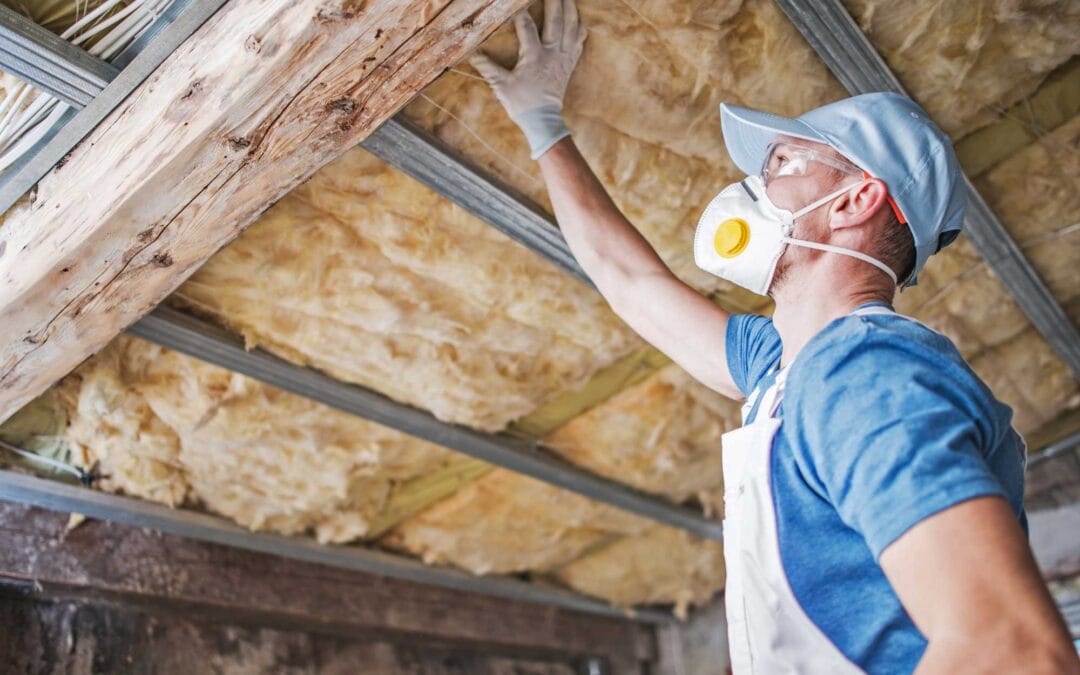
Have you noticed irregular temperatures in your home? Before it gets too cold, it’s a great idea to ensure that your home is properly insulated and ventilated. Having a professional inspection done will help you evaluate if there is more insulation that should be added that will help you regulate your home’s temperature, reduce your monthly electric bills, and ensure that you will stay warm this upcoming winter season.
Plan for an Emergency: Tip 4
It’s always a smart idea to have a plan in place for any emergency damage that your roofing and home may sustain during the winter months. Make sure that you gather storm damage resources from your local government in New Jersey. You can often find online guides on ways to prepare for various types of storms through your local government’s emergency management page. It’s also a good idea to choose a local roofing company that you know has experience with storm damage repair and restoration.
Why Choose Simple Roofing?
Planning ahead and winter-proofing your roof will help give you peace of mind during the upcoming winter months. Simple Roofing is dedicated to providing New Jersey and the surrounding area with honest communication, superior customer service, and long-lasting and personalized home improvement solutions. At Simple Roofing, our goal is to be a professional roofing contractor that you can rely on.
We provide a variety of services that include: asphalt shingle roofing, residential roof repairs & replacements, seamless gutter installations, and emergency storm damage repairs.
Call us today to learn more about our offerings or to schedule a free inspection!
 (201) 429-9607